Islamic manners for kids: teaching adab at home
Practical ways to teach children Islamic manners (adab): greeting with salam, eating, speaking kindly and respecting parents, with ideas for every age.
4 minute read · SunnahPanda

Adab means good manners and good character: how we speak, eat, greet people and treat those around us. In Islam, manners aren't an optional extra. They are part of our faith, and the Prophet ﷺ was the best example of them. Allah Himself praised his character in the Qur'an.
And indeed, you are of a great moral character.
Children learn adab far more from what they see than what they're told. The single most effective thing you can do is model it: say salam when you walk in, say please and thank you to your children, and apologise when you get it wrong.
Ten everyday manners to start with
- 1
Greeting with salam
Say "Assalamu 'alaykum" when you meet someone or come home, and reply with "Wa 'alaykumus-salam". Make it the first thing everyone says at the door.
- 2
Bismillah before eating
Say Bismillah before you start, and Alhamdulillah when you finish.
- 3
Eating with the right hand
Eat and drink with the right hand, and eat from what's nearest to you on a shared plate.
- 4
Speaking kindly
No name-calling and no shouting. If you can't say something good, it's better to stay quiet.
- 5
Respecting parents
Answering when called, helping without being asked twice, and never saying "uff" to them.
- 6
Respecting elders
Standing up for an older person on the bus, letting grandparents go first and speaking politely to them.
- 7
Being gentle with the young
Older siblings help and share with younger ones, and are patient with them.
- 8
Asking permission
Knock and wait before going into a room, and ask before borrowing someone's things.
- 9
Smiling
A smile is a small kindness anyone can give, even when there's nothing else to share.
- 10
Saying sorry and forgiving
Teach both halves: how to apologise properly, and how to accept an apology gracefully.
Before eating
Sunan Abi Dawud 3767بِسْمِ اللَّهِ
Bismillah
“In the name of Allah.”
How to make manners stick
- Pick one manner a week. Talk about it on Monday, practise it all week, and celebrate on Friday.
- Catch them being good. Specific praise works best: "You said salam to Grandma without being reminded. That was lovely."
- Role-play tricky moments with toys: what do you say when someone takes your turn on the swing?
- Share stories of the Prophet ﷺ and his Companions that show kindness, honesty and patience.
- Gently correct in private, not in front of friends or relatives.
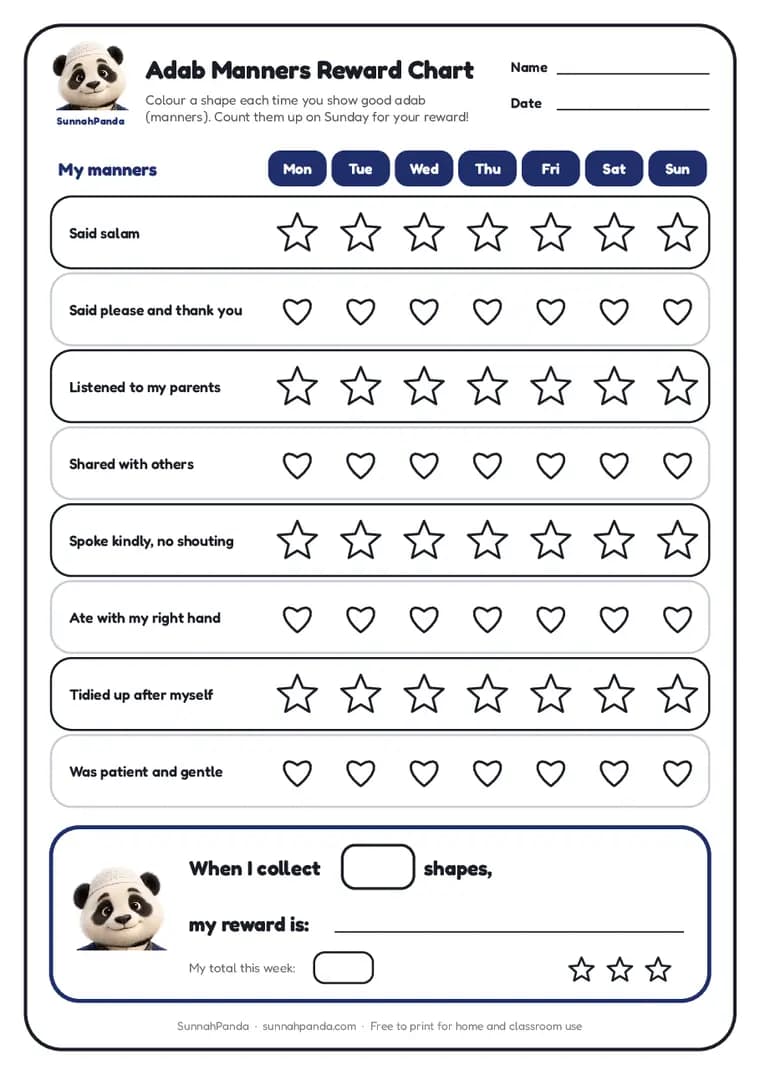
Adab Manners Reward Chart
Eight good manners to practise every day for a week, from saying salam to tidying up. Colour a star each time and plan a small reward at the end.
Adab at different ages
- Ages 2 to 4: salam, Bismillah, the right hand and "thank you". Keep it to a few habits repeated every day.
- Ages 5 to 7: add asking permission, sharing, saying sorry and helping at home. A sticker chart can help.
- Ages 8 to 11: talk about the why. Why do we respect elders? Why does backbiting hurt? Older children can lead by example for younger siblings.
Manners with friends and guests
- When guests arrive, children can greet them with salam, offer a drink and show them where to sit.
- When visiting others, knock or ring once and wait. If nobody answers after a few tries, it's fine to leave and come back another time.
- Share toys with visiting children, and let the guest choose the game first.
- Thank the host before leaving, and later talk about what made the visit nice.
- At school, the same adab applies: kind words, waiting your turn and helping a classmate who is on their own.

SunnahPanda tip
Manners at the dinner table are the easiest place to start, because the moment comes up every day. Stick the eating du'as where everyone can see them.
When it's hard
Every child goes through phases of rudeness, and tiredness or hunger make it worse. Stay calm, keep your own adab, and remember that good character is built over years, not days. Making du'a for your children is part of the work too.
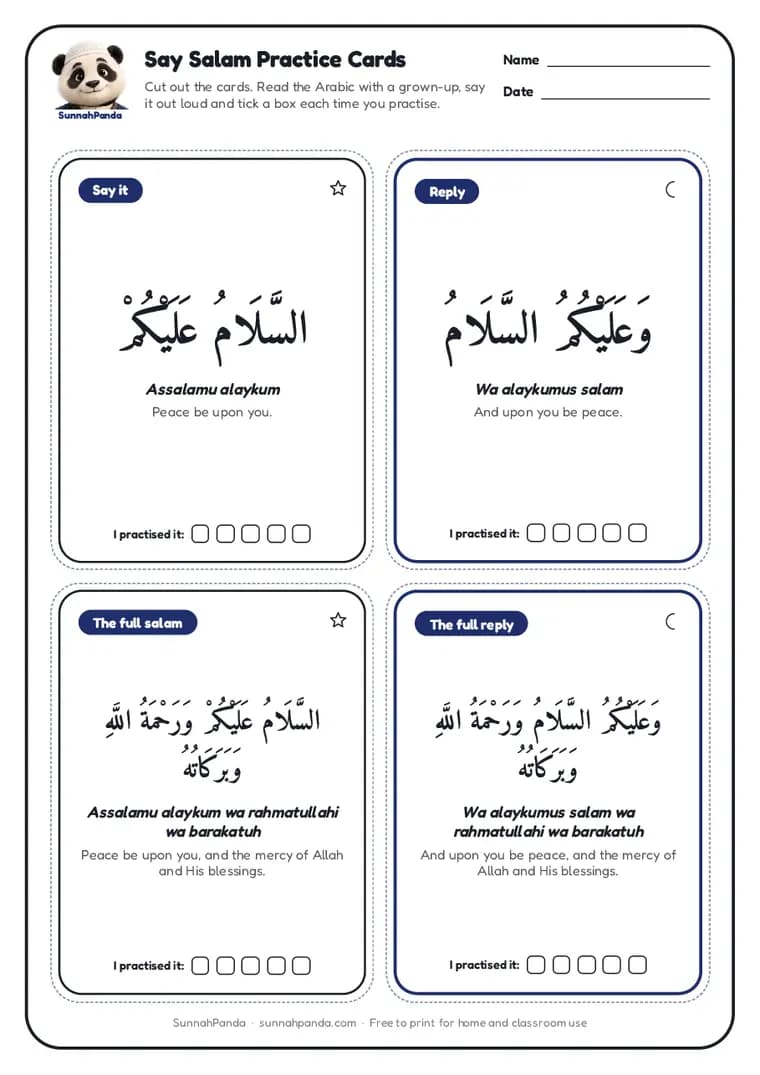
Say Salam Practice Cards
The salam and its reply in Arabic, with transliteration and meaning, plus role-play cards to practise who greets first.
 End of guide