An Islamic bedtime routine for kids that really works
A calm Islamic bedtime routine for children: wudu, short surahs, the bedtime du'a and gentle sunnahs, with ideas for toddlers up to older kids.
4 minute read · SunnahPanda

Bedtime is one of the best moments of the day for building Islamic habits. Children are calm, close to you and usually happy to stretch out the time a little longer. A few small sunnahs, repeated every night, can become something they carry for life, and they may well remember your voice saying them long after they've grown up.
You don't need to do everything below. Pick two or three to start, keep them the same each night, and add more once they're settled.
A simple routine, step by step
- 1
Isha, then wind down
If your child is old enough, pray Isha together first. For little ones who go to bed before Isha, start the routine after their bath.
- 2
Teeth and toilet
Brush teeth and use the toilet. A good moment to practise the du'as for entering and leaving the toilet.
- 3
Make wudu
The Prophet ﷺ taught going to bed in a state of wudu. Even a quick, gentle wudu helps mark the shift to sleep.
- 4
Dust the bed
The Prophet ﷺ taught dusting off the bed before lying down. Children enjoy giving the sheet a shake.
- 5
Lie on the right side
Lying down on the right side to begin with is a sunnah. Children can turn over once they're asleep.
- 6
The three Quls
Recite Surahs al-Ikhlas, al-Falaq and an-Nas, blow lightly into your cupped hands and wipe over as much of the body as you can. The Prophet ﷺ did this each night, three times.
- 7
Ayat al-Kursi
Recite Ayat al-Kursi (al-Baqarah 2:255). Older children can learn it a line a week.
- 8
Tasbih
Say SubhanAllah 33 times, Alhamdulillah 33 times and Allahu Akbar 34 times. The Prophet ﷺ taught this to his daughter Fatimah and to 'Ali for bedtime.
- 9
The bedtime du'a
Finish with the short du'a below, then a hug and lights out.
Before sleeping
Sahih al-Bukhari 6324بِاسْمِكَ اللَّهُمَّ أَمُوتُ وَأَحْيَا
Bismika Allahumma amutu wa ahya
“In Your name, O Allah, I die and I live.”
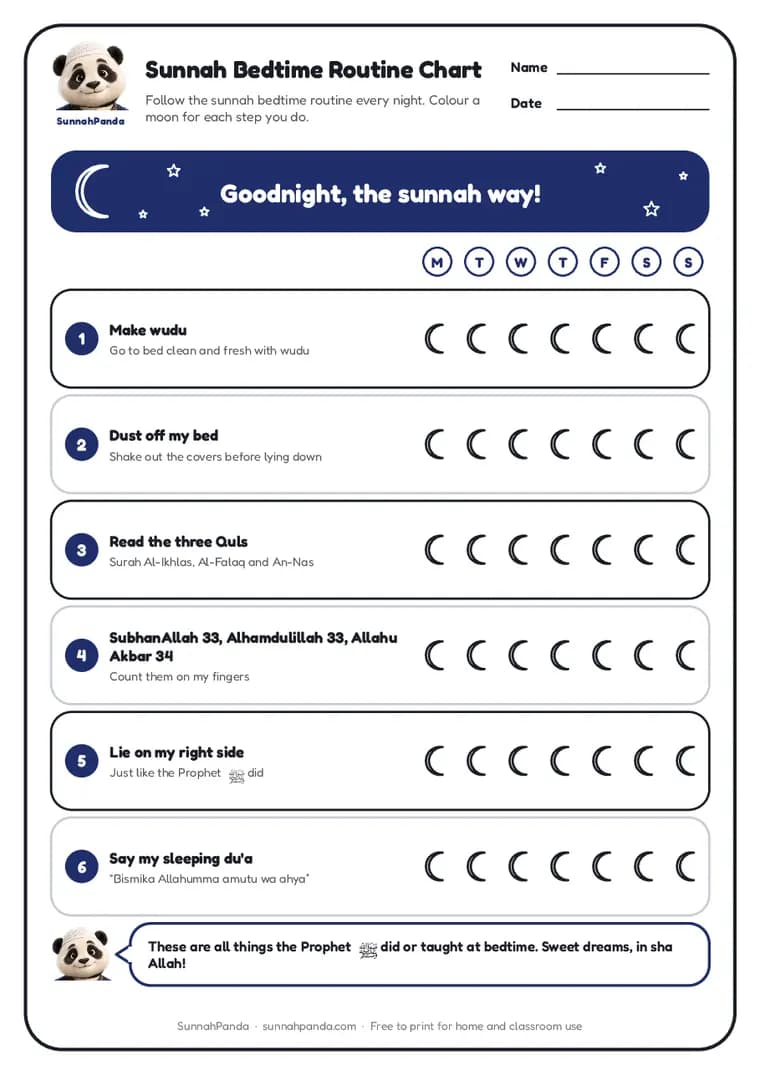
Sunnah Bedtime Routine Chart
The bedtime sunnahs in order, from wudu and dusting the bed to the three Quls and the sleeping du'a. Stick it by the bed and let your child lead.

SunnahPanda tip
If the full routine feels like too much, the bedtime du'a on its own is a perfect start. It's one short line, and even two-year-olds can learn it.
Ideas by age
- Ages 2 to 4: you say everything; they listen and copy. Keep it under five minutes. The three Quls with the blowing and wiping often becomes a favourite.
- Ages 5 to 7: let them say the du'a themselves and choose which short surah to recite. A story about a prophet or Companion fits well here.
- Ages 8 and up: hand over more of the routine. Encourage them to make their own du'a in their own words, about their day and the people they love.
Gentle add-ons
- Three good things: ask "What are three things you're thankful to Allah for today?" and say Alhamdulillah for each.
- Forgive and forget: if there was a falling-out, make up before sleep so nobody goes to bed upset.
- A short story from the Seerah or the lives of the prophets, a few minutes a night.
- Quiet recitation: play a calm Qur'an recitation as they drift off.
Making it stick
- Do it in the same order every night. Children relax when they know what comes next.
- Let each child have a job, such as shaking the bed or leading the du'a, and take turns.
- If you're away or a grandparent does bedtime, write the routine down so it carries on.
- Keep screens out of the last half hour so the routine feels like winding down, not a fight to switch off.
In the morning
Bookend the night with the waking-up du'a. Say it together as soon as they open their eyes, so the first words of the day are thanks to Allah.
When waking up
Sahih al-Bukhari 6324الْحَمْدُ لِلَّهِ الَّذِي أَحْيَانَا بَعْدَ مَا أَمَاتَنَا وَإِلَيْهِ النُّشُورُ
Alhamdu lillahil-ladhi ahyana ba'da ma amatana wa ilayhin-nushur
“All praise is for Allah, who gave us life after He made us die, and to Him is the return.”
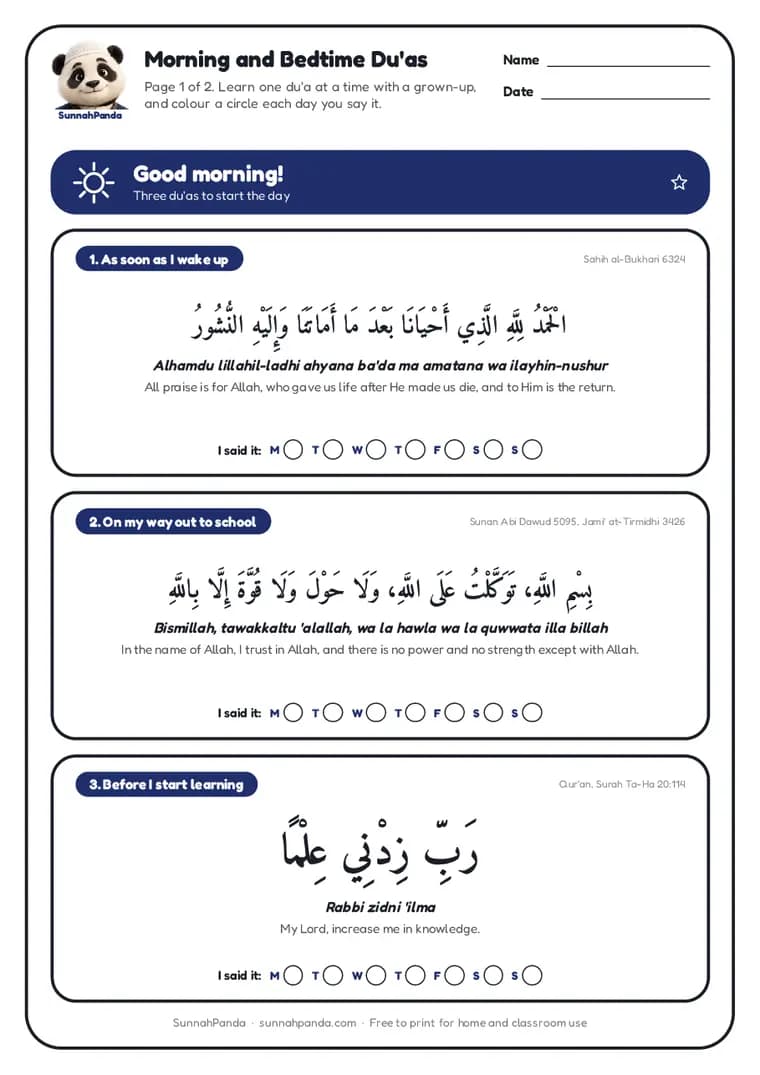
Morning and Bedtime Du'as
The waking-up and bedtime du'as, plus a few more for the day, in Arabic with transliteration and meaning. Pin it up by the bed.
When bedtime goes wrong
Some nights will be tears and tantrums, and that's fine. Keep the core of the routine short enough that you can do it even on a bad night: one du'a and a hug still counts.
 End of guide